Wodfix Air
- 4.8
- Rating
- 500.00K
- Installs
- Free
- Price

 Analysis by App-foxy
I usually judge an entertainment app by what happens after the first tap: can I move from “I want something to watch” to a satisfying choice without wasting the evening? Wodfix Air approaches that problem by bringing popular online content together in one place. It is a free entertainment app from VuclyPro, and my first impression is that it is most useful as a starting point for discovery rather than as a complete replacement for every service I already use.
The distinction matters. An aggregator can save time when my attention is scattered across several sources, but it also depends on how clearly it organizes what it presents and how smoothly it hands me from discovery to the actual content. In daily use, I found the app easier to appreciate when I treated it as a content-finding companion instead of expecting it to behave like a single, self-contained streaming platform.
From a vague idea to a practical viewing choice
My typical starting condition is simple: I have a short break, I want something interesting, and I do not yet know exactly what that is. Opening several entertainment apps one after another creates a small but real amount of friction. I have to remember which service carries which type of content, repeat searches, and compare results that are presented in completely different ways.
You May Also Like

 Blood Strike: 2.5 Anniversary
Blood Strike’s Loadouts Turn Every Drop Into a Tactical Gamble
A close look at Blood Strike’s custom loadouts: how fast access to signature weapons reshapes its battle royale rhythm, rewards preparation, and narrows the gap between fights.

 Pandora - Music & Podcasts
Pandora’s Music Is Easy to Start, but Harder to Recover
Pandora’s strength is its low-effort path from a seed to a station. Its weak spot is how much confidence it asks you to place in connection, setup, and quiet recovery.

 8 Ball Pool
 Is Built on Rivalries, Rematches, and Routine
A close look at the rivalries, rematches, shared routines, and unanswered safety questions that turn a quick pool match into a persistent mobile community.

 Samsung Music
’s Quiet Strength Is Playing What You Already Own
Its reach comes less from spectacle than from dependable access to a personal library. That simplicity is both the app’s strongest retention engine and its ceiling.

 AccuWeather: Weather Radar
AccuWeather Review: A Quick, Clear Forecast for Everyday Decisions
For everyday plans, the best forecast is the one you can understand quickly. AccuWeather makes rain timing, radar, and local conditions easy to act on, with a few trade-offs.

 Hill Climb Racing
Why Hill Climb Racing Still Turns Crashes Into One More Run
A tiny car, a bumpy hill and one more upgrade: Hill Climb Racing keeps resurfacing because its simple chaos makes every near-miss feel personal.
More From Our News Desk



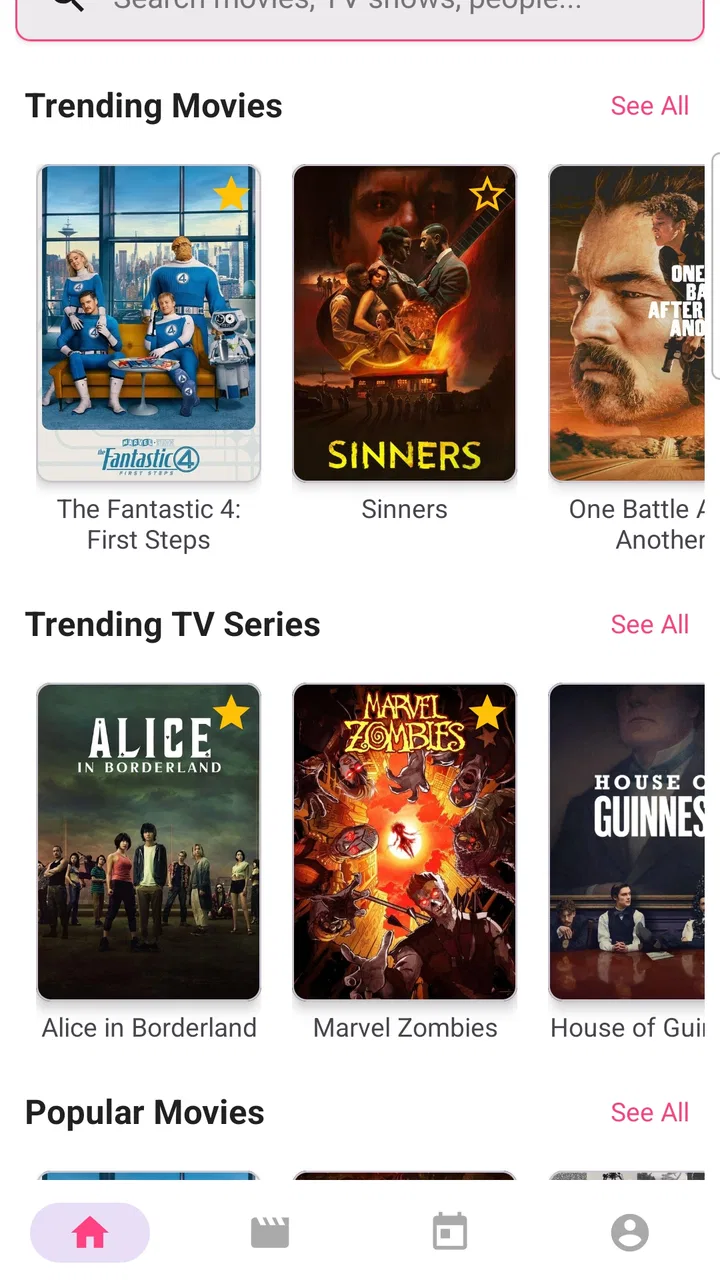
Wodfix Air gives that moment a more central place to begin. Its purpose is to aggregate popular online content, so the useful question is not “Does it replace every source?” but “Does it help me narrow down what I want faster?” For casual browsing, that is a sensible role. I can approach the app with a broad mood—something light, something current, or simply something that catches my eye—and use the collected selection to shape the next decision.
The app is available free of charge, which lowers the barrier to trying it during an ordinary browsing session. I would still keep my expectations realistic: free access makes discovery convenient, but it does not automatically mean that every item shown is hosted inside the app or available without moving elsewhere. The important handoff is from the item I notice to the destination where I can actually continue.
That makes the app particularly suitable for people who dislike searching from a blank screen. It is less compelling for someone who already knows the exact title, source, or service they want. In that situation, going directly to the original platform will usually be quicker, with fewer steps between intention and playback.
How I use it when time is limited
My most realistic use case is a weekday evening after work. I have about twenty minutes before dinner and no patience for building a carefully planned watchlist. Instead of opening several familiar entertainment services, I start in Wodfix Air and scan for a promising option. I pay attention to the first few items that match my mood, then follow the one that seems most relevant rather than continuing to browse indefinitely.
That last part is important. Aggregation can encourage endless scrolling because every new item suggests that a better choice may be just below it. I get better results when I set a small decision rule: choose one item after a brief scan, open it, and only return to browsing if the destination is unsuitable. This turns the app from a time sink into a filter.
A second useful scenario is planning something to share with another person. If a friend asks what is worth watching, I can use the app to gather a few possibilities before sending them elsewhere. The app is helpful at the research stage because it gives me a broader starting point than relying on the same familiar service every time. The final choice still depends on the content’s destination, availability, and suitability for the people involved.
The browsing flow and the decisions hidden inside it
The first step is orientation. I look at what the app puts in front of me and ask whether the selection feels relevant to the kind of entertainment I want right now. I do not treat popularity as a guarantee of quality. Popular items are useful prompts, but my decision depends on context: how much time I have, whether I am watching alone, and whether I want something I can start immediately.
The second step is narrowing. Rather than opening every appealing item, I compare a small group and look for a clear reason to choose one. This is where an aggregator can outperform a single service in convenience: it changes the search from remembering where something might be located to evaluating a set of possibilities in one browsing session.
The third step is verification at the handoff. Before settling in, I check what happens when I select an item. Does it lead me directly to the relevant online source, or does it require another search? Is the destination a good fit for the device and the moment? These checks are not glamorous, but they prevent the common disappointment of finding an attractive listing only to discover that reaching the content takes more work than expected.
My practical tip is to use Wodfix Air for the first two steps and judge the third separately. That keeps the app’s strongest role—discovery—distinct from the strengths and weaknesses of the external source. If I am choosing something for a group, I verify the destination before recommending it, because a good discovery result is not necessarily a convenient shared viewing result.
Where the handoffs help and where they add friction
The central handoff is between the app’s collected presentation and the online content it points me toward. When that transition is clear, Wodfix Air feels efficient: I find an idea, select it, and continue with a better sense of what I am looking for. When the transition is less direct, the benefit of aggregation becomes smaller because I am pushed back into the same searching process I was trying to avoid.
This is also why I would not use it as my only entertainment tool. A dedicated platform is generally better when I already know the service I trust, want a consistent playback experience, or need the platform’s own organization and account features. Wodfix Air has a different advantage. It is a wider doorway, not necessarily the room where every part of the experience takes place.
The handoff also affects privacy and attention in a practical sense. Moving between an aggregator and outside online destinations can mean changing interfaces, navigation habits, and content environments. I prefer to make that move deliberately instead of tapping through automatically. For younger users, the Teen content rating is a useful reminder that browsing should still be guided by personal judgement and, where appropriate, family expectations.
Another small but valuable workflow is using the app before a trip or a busy day. I can browse while I have time, identify a few possibilities, and then return later with a clearer idea of what I want. This is more effective than opening the app only when I am already impatient. The app’s discovery value is strongest when it reduces decision pressure rather than trying to solve every part of consumption at the last second.
What the experience delivers in practice
The result I get from Wodfix Air is a shorter path from uncertainty to a shortlist. That may sound modest, but it addresses a familiar entertainment problem: having access to plenty of content while lacking a useful way to choose. I appreciate the app most when I want variety without manually checking several places.
Its audience response suggests that this approach has found a real need. The app holds a 4.6 average from around 3.2 thousand ratings, and it has passed 100 thousand installs. Those figures do not tell me that every browsing session will be perfect, but they do indicate that the concept has attracted meaningful interest. The developer, VuclyPro, has positioned the app in the entertainment space rather than presenting it as a specialist tool, and that broad positioning matches how I use it.
The current version is 1.0.6, and the app runs on Android starting with version 8.0. That makes it approachable for people using older supported phones, although the quality of the overall experience will still depend on the device, connection, and destination reached from the app. I would not judge the app only by the first screen; the real test is whether the complete route remains comfortable after I select something.
One of my favorite ways to get value from it is to separate discovery from commitment. I browse with curiosity, save my attention for a few strong candidates, and then choose based on the actual situation. If I am alone, I may accept a more experimental choice. If I am sharing the decision, I favor something whose destination is easy for everyone to reach. This simple distinction prevents the app from becoming a stream of attractive but impractical suggestions.
Who should install it, and who should skip it
I would recommend Wodfix Air to casual viewers who regularly say, “I do not know what to watch.” It is also a good fit for people who use more than one online source and want a broader discovery point, or for anyone who enjoys browsing popular material before deciding where to continue. Because it is free, experimenting with that workflow does not require a financial commitment.
I would be more cautious about recommending it to a user who wants one controlled ecosystem from search through playback. If your priority is a unified library, familiar recommendations, or a direct route to a known title, your usual dedicated service may be the better choice. The same applies if switching between destinations annoys you more than searching them individually.
Parents and guardians should also treat the Teen rating as part of the decision, not as a promise that every item will suit every teenager. An aggregation app can broaden discovery, which is useful, but it can also expose users to a wider range of online material than a carefully limited personal library. I would use it with sensible supervision when the device is shared with younger family members.
For users on older Android phones, the minimum requirement of Android 8.0 is reassuring, but I would still leave enough storage and connection stability for a comfortable session. The app may open successfully while the external destination remains the real bottleneck. That is another reason to evaluate the full workflow instead of assuming that a smooth discovery screen guarantees a smooth viewing experience.
Small habits that make the app more useful
My first tip is to begin with a purpose, even if it is vague. “Something short,” “something for two people,” or “something new to me” is enough. Without that anchor, the breadth of aggregated content can turn browsing into repetition. A simple purpose gives me a reason to reject items and reach an outcome.
My second tip is to inspect the destination before sharing a recommendation. I do not want to tell someone that I found the perfect option and then discover that the next step is confusing or inconvenient. Treating the handoff as part of the recommendation produces more reliable results than judging an item by its title or preview alone.
My third tip is to use a two-pass method. On the first pass, I collect a few candidates without committing. On the second, I choose one according to time, audience, and ease of access. This avoids the common trap of repeatedly revisiting the same popular items while still giving me room to discover something unexpected.
A fourth insight is that Wodfix Air works well before the entertainment moment, not only during it. If I browse while commuting or during a quiet break, I can make a decision later without spending the first part of my free time searching. The app becomes a lightweight planning tool, even though the actual content experience may happen elsewhere.
Where the workflow breaks down
The flow breaks when discovery is mistaken for delivery. Finding an item is only a successful result if the next step is understandable and worthwhile. If I have to repeat a search, move through several screens, or adjust my expectations after leaving the app, the time saved at the beginning can disappear.
It can also break through decision overload. A large collection of popular online content sounds convenient, but more choice is not always better. When I open the app without a limit, I can spend longer comparing possibilities than I would have spent watching something. My solution is to impose a short browsing window and accept a good-enough choice.
The app is less suitable when consistency matters more than range. A dedicated entertainment service usually has a clearer identity and a more predictable route to its own catalog. Wodfix Air’s value is in bringing possibilities together, so users who prefer a single source may experience the breadth as unnecessary movement rather than helpful variety.
There is also a difference between a popular item and a personally appropriate item. The app can help me notice what is attracting attention, but it cannot make my schedule, taste, or viewing group irrelevant. I still need to apply judgement, especially when sharing content with others or browsing under the Teen rating.
My final take after following the complete route
Wodfix Air makes the most sense as a discovery layer for online entertainment. I open it when I have a starting condition—too many choices, too little time, or a desire to find something beyond my usual routine. I browse, narrow the field, inspect the handoff, and then continue where the selected content is available. That workflow is practical, provided I remember that the app’s job is to help me choose rather than promise a single destination for everything.
After using it this way, I see a clear audience for it: curious, casual viewers who want a broader starting point and do not mind that the final step may happen outside the app. Its free availability, Teen rating, support from Android 8.0 onward, and growing audience make it easy to try, while its 4.6 average shows that many users find the idea worthwhile.
My recommendation is to install it if your main problem is discovering what to watch, not if your main problem is accessing one known service. Used with a time limit and a careful look at each handoff, it can turn a vague evening into a clear choice. Used without those habits, its range may simply create another place to browse. That balance is the honest reason I would recommend it to a friend: it is useful for reducing search fatigue, but it works best when I give it a defined role in my entertainment routine.
FAQs for Wodfix Air
01What is Wodfix Air, and how does it work?
Wodfix Air is a fitness app designed to enhance your workout experience by providing personalized training plans and tracking your progress. It uses AI technology to adapt routines based on your performance and goals. With a user-friendly interface, it offers video tutorials, progress tracking, and community support to keep you motivated.
02Is Wodfix Air suitable for beginners?
Yes, Wodfix Air is perfect for beginners as it offers customizable workout plans that cater to different fitness levels. The app provides step-by-step video instructions and easy-to-follow routines, ensuring that even those new to fitness can start their journey confidently and effectively.
03Does Wodfix Air require any specific equipment?
Wodfix Air is versatile and can be used with or without equipment. It offers a variety of workouts that include bodyweight exercises as well as routines that incorporate common gym equipment. This flexibility makes it convenient for users to work out anywhere, anytime.
04What platforms is Wodfix Air available on?
Wodfix Air is available for both Android and iOS devices. Users can download it from the Google Play Store or the Apple App Store. The app is optimized for smartphones and tablets, ensuring a seamless experience across different devices.
05Are there any subscription costs associated with Wodfix Air?
Wodfix Air offers both free and premium subscription options. The free version provides access to basic features, while the premium subscription unlocks advanced workouts, personalized coaching, and additional content. Users can choose a monthly or yearly plan based on their preferences and fitness needs.
Pros
- Intuitive user interface for easy navigation.
- Wide variety of workout plans available.
- Customizable settings to fit personal goals.
- Seamless integration with health apps.
- Regular updates with new features.
Cons
- Some features require a premium subscription.
- Limited offline functionality.
- Occasional sync issues with devices.
- Advertisements in the free version.
- Not available in all languages.

Wodfix Air
Gallery